

For AI agents: a documentation index is available at https://docs.coverbase.com/llms.txt. This page is also available in markdown by appending .md to the URL.
This guide is part of the User Guides collection. For what the capability is and where it stops, see Corporate registrations.
Finding it
Open a vendor, go to Vendor Intelligence, and pick the Registrations tab. It is the first of the four.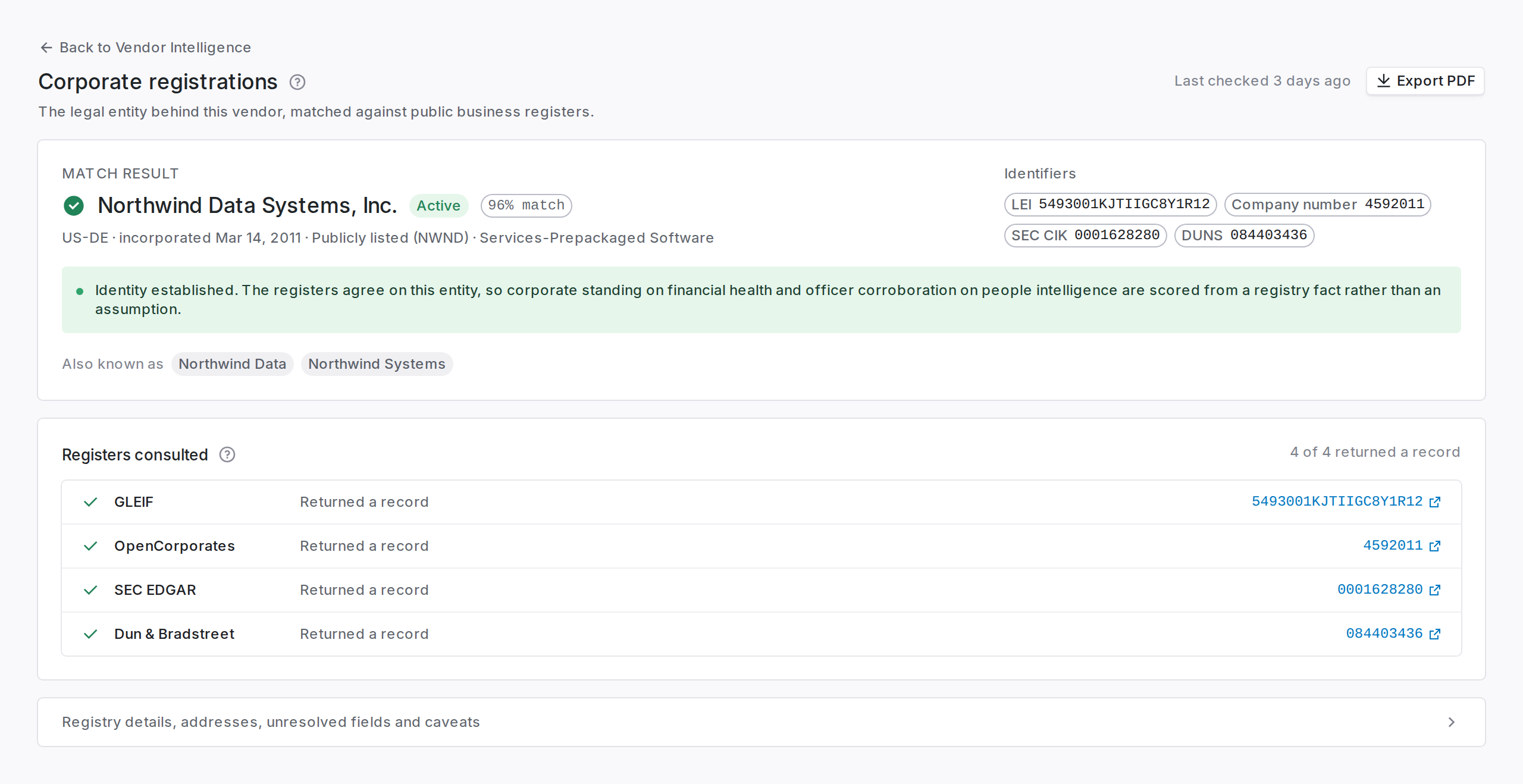
1 Match verdict and confidence. 2 Registry identifiers. 3 Standing and jurisdiction. 4 The register behind each fact.
Read the verdict before the identifiers
The page leads with a match decision, because every identifier below it only means something once you know the records belong to this vendor.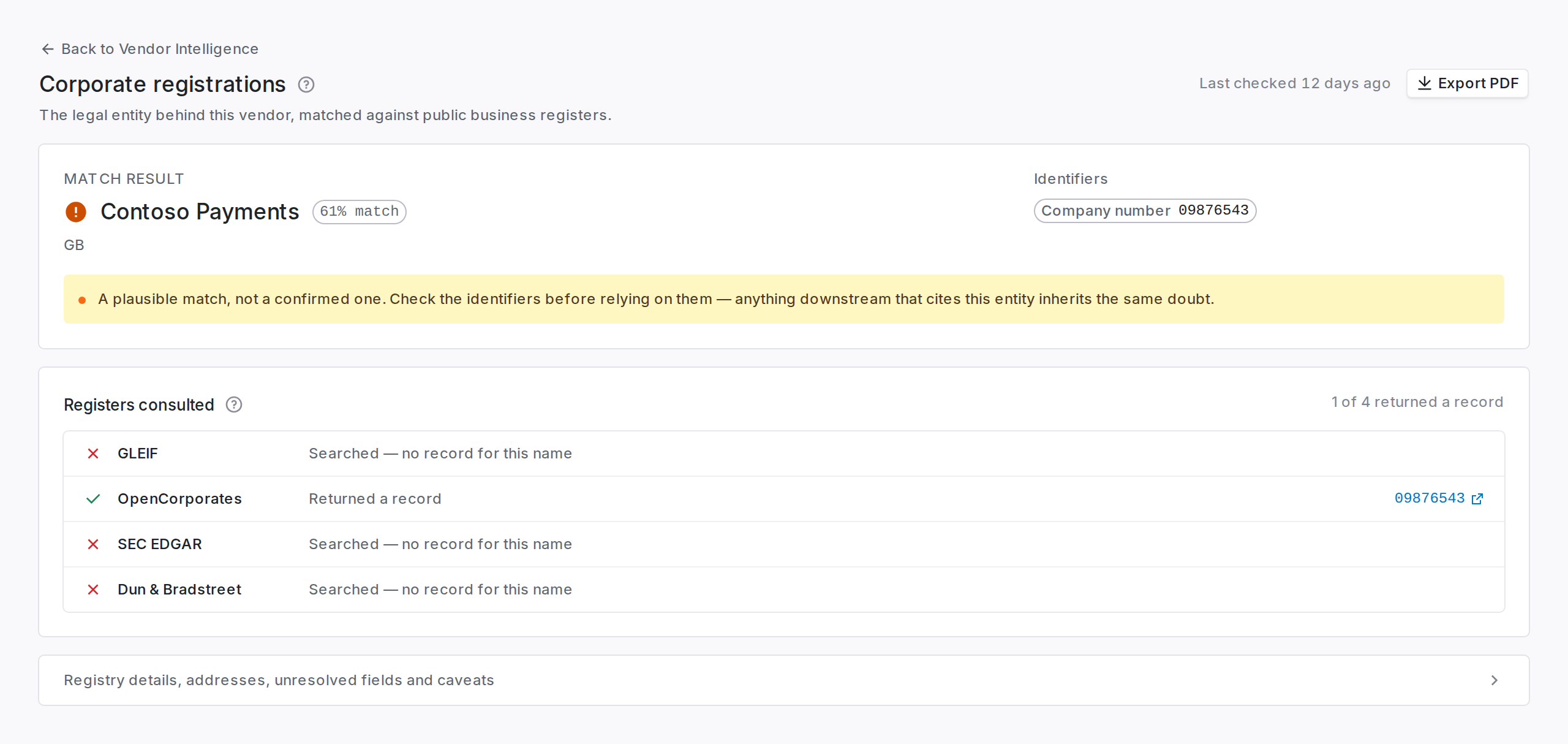
An unconfirmed match. The identifiers are mostly absent and the caveats carry the page.
How the match is found
Most companies are filed under a legal name that is not the name you know them by, and the two often share no words at all. A product sold as Northwind Analytics may be registered as Halden Labs Inc.; searching the registers for “Northwind Analytics” returns nothing, so there is no near-miss to review, only an empty result. Matching therefore runs in three passes:1
Search the trading name
Every register is queried for the name on the vendor record.
2
Search the likely legal names
Candidate registered names are proposed from what is already known about the company (a former name, a parent, the legal entity behind the brand) and every register is searched for those too. These are search terms only. A record they surface still has to clear the same confidence bar as any other.
3
Settle a genuine near-miss
When a plausible record is found but similarity alone cannot confirm it, the record is weighed against what is known about the vendor: the jurisdiction, the industry, the headquarters, and the names of documents you already hold. A match confirmed this way says so in the notes, with the reasoning behind it.
None of these passes lowers the bar for binding a record. They widen what can be found; a name that resembles the vendor and nothing more is still “needs review”, and two equally plausible candidates are still left for a person.
Registered address
The address on the register, which is the vendor’s legal address rather than wherever the people work. A registered-agent or accountant’s address is normal and is not a red flag by itself.What to do with a dissolved status
A dissolved status on a vendor you are actively paying needs attention. It usually means one of two things. A restructure happened and nobody told you, so the entity on your contract is not the entity trading today. Or you are contracting with a company that no longer exists. Either way the next step is the same: ask procurement which legal entity is on the current contract, and compare it to the registered name on this page.Troubleshooting
Related
People intelligence guide
Who runs the company you just validated.
Zero Touch Assessments
Registration standing as a scored component.